
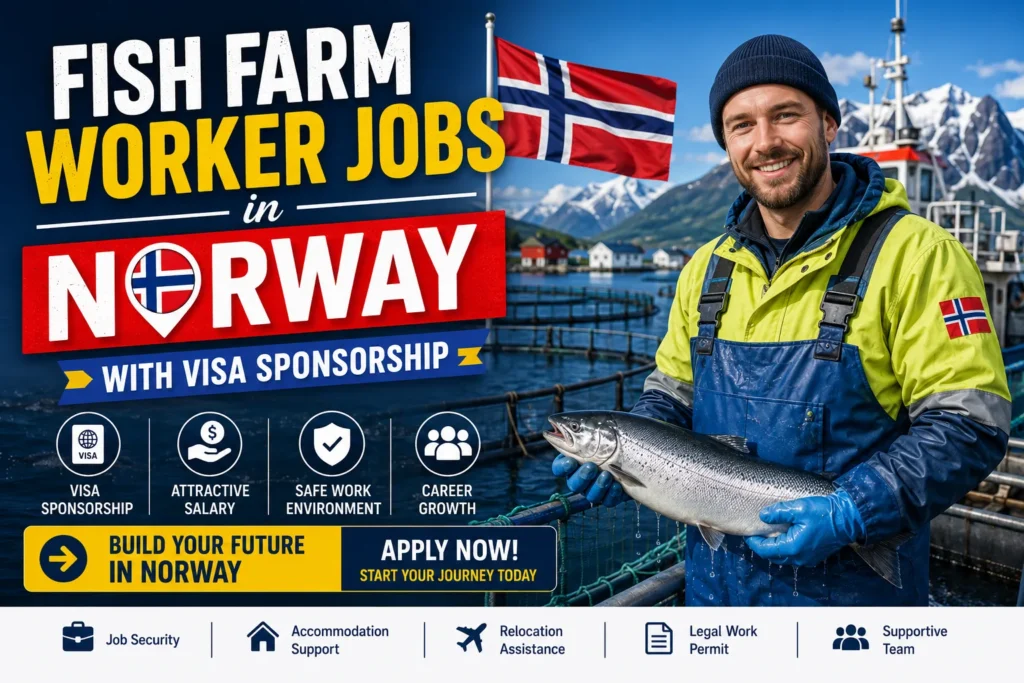
Norway is one of the world’s leading countries in aquaculture and seafood production, especially known for Atlantic salmon farming. The country’s coastal regions operate thousands of fish farms, hatcheries, and seafood production facilities that require workers to feed fish, monitor farm conditions, maintain equipment, and support daily aquaculture operations.
In 2026, Fish Farm Worker Jobs in Norway provide excellent opportunities for international workers interested in the aquaculture and seafood industry. Some Norwegian employers recruit foreign workers and may assist eligible candidates with work permits when employment requirements are fulfilled. Applicants should always confirm visa and work permit support directly with the employer before accepting a job offer.
Job Details
| Job Title | Fish Farm Worker |
|---|---|
| Country | Norway |
| Industry | Aquaculture / Fish Farming |
| Job Type | Full-Time / Seasonal |
| Experience Required | Not Always Required |
| Education Required | No Formal Qualification Required |
| Age Requirement | 18 Years or Above |
| Visa Sponsorship | Available with Selected Employers |
| Salary | NOK 35,000 to NOK 55,000 Per Month |
| Accommodation | Sometimes Provided or Assisted |
| Contract Duration | 6 Months to Permanent |
Also Check: Agricultural Greenhouse Jobs in Norway with Visa Sponsorship 2026
Job Description
Fish Farm Workers help operate and maintain fish farming facilities, ensuring healthy fish growth and efficient production.
Typical responsibilities include:
- Feeding fish according to farm schedules
- Monitoring fish health and behavior
- Checking water quality and environmental conditions
- Cleaning fish tanks, cages, and equipment
- Maintaining feeding systems and machinery
- Assisting with fish handling and harvesting
- Recording daily farm activities
- Inspecting equipment for problems
- Following fish welfare and safety procedures
- Supporting general aquaculture operations
Salary Expectations
Fish Farm Workers in Norway receive competitive wages depending on experience, employer, location, and responsibilities.
Estimated monthly earnings include:
- Entry-Level: NOK 35,000 to NOK 42,000 per month
- Experienced Workers: NOK 43,000 to NOK 55,000 per month
Additional earnings may include:
- Overtime pay
- Shift allowances
- Weekend bonuses
- Holiday pay
- Performance incentives
Many employers may also provide:
- Accommodation assistance
- Work clothing and safety equipment
- Training programs
- Insurance benefits
- Paid holidays
Job Requirements
Applicants generally need:
- Minimum age of 18 years
- Good physical fitness
- Ability to work outdoors and in coastal environments
- Willingness to work with fish and marine equipment
- Basic English communication skills
- Ability to follow safety instructions
- Reliable and responsible attitude
- Valid passport
Previous experience in aquaculture, fishing, farming, factory work, or animal care can improve employment chances. Some aquaculture operator roles prefer candidates with relevant experience and technical skills.
Visa Sponsorship
Some Norwegian fish farms and aquaculture companies recruit international workers and may support eligible candidates through the work permit process. A valid employment contract from a Norwegian employer is generally required before applying for a work permit.
Visa sponsorship availability depends on:
- Employer requirements
- Worker qualifications
- Position type
- Norwegian immigration regulations
Applicants should verify that an employer genuinely supports work permit applications before paying any recruitment fees.
Employee Benefits
Depending on the employer, benefits may include:
- Work permit assistance
- Competitive salary
- Accommodation support
- Paid overtime
- Health and insurance benefits
- Work equipment provided
- Training opportunities
- Safe working conditions
- Long-term employment possibilities
Working Hours
Typical work schedule:
- 37.5 to 40 hours per week
- Day or rotating shifts
- Weekend work may be required
- Overtime during busy farming periods
Fish farms often operate every day because fish require continuous care and monitoring.
Skills That Improve Your Chances
Helpful skills include:
- Aquaculture knowledge
- Fish handling
- Animal care experience
- Equipment maintenance
- Basic technical skills
- Safety awareness
- Physical endurance
- Teamwork
- Problem-solving skills
- English communication
Employers Hiring Fish Farm Workers
Employment opportunities may be available with:
- Salmon farming companies
- Fish hatcheries
- Aquaculture farms
- Seafood production companies
- Marine farming facilities
- Fish processing companies
- Coastal farming operations
- Research aquaculture facilities
Norway has active recruitment in seafood and fish production sectors, including production worker and aquaculture-related roles.
Who Can Apply?
International applicants from many countries may be eligible, including:
- Pakistan
- India
- Bangladesh
- Nepal
- Sri Lanka
- Philippines
- Indonesia
- Kenya
- Ghana
- Nigeria
- South Africa
- Other eligible countries, subject to employer requirements and Norwegian immigration regulations
Required Documents
Applicants should prepare:
- Updated European-style CV
- Valid Passport
- Passport-size photographs
- Educational certificates (if available)
- Work experience certificates
- Police clearance certificate (if required)
- Medical documents (if required)
- Cover letter
Why Work in Norway?
Working in Norway’s aquaculture industry offers several advantages:
- High-quality workplace standards
- Competitive salaries
- Modern fish farming technology
- Strong worker protection laws
- Opportunity to gain international experience
- Career growth in the seafood industry
- Beautiful coastal working environments
How to Apply
Follow these steps to apply successfully:
- Prepare a professional European-style CV highlighting farming, fishing, animal care, warehouse, or factory experience.
- Search for verified Fish Farm Worker vacancies that mention work permit support.
- Apply directly through legitimate employers or recruitment platforms.
- Submit your CV and required documents.
- Attend an online interview if shortlisted.
- Receive a formal employment offer.
- Complete the Norwegian work permit application process.
- Travel to Norway after receiving approval.